E-Jet E2
E175-E2, E190-E2, E195-E2
Two independent sources on every claim.
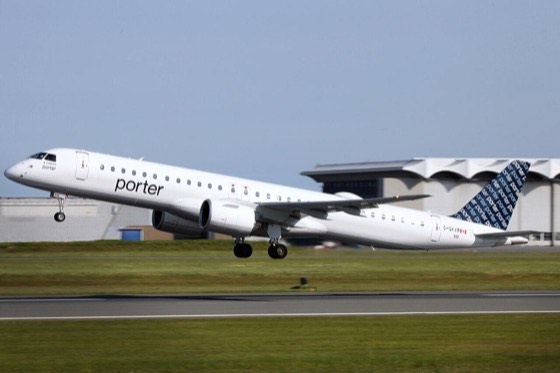
At a glance
- Embraer delivered its 2,000th E-Jet on 2 September 2026, an E195-E2 handed to launch customer Azul, a milestone across the E1 and E2 families combined.
- The E2 programme has passed 500 total orders. Embraer's overall backlog reached 34.5 billion dollars in the second quarter of 2026, a seventh consecutive record.
- The E175-E2 is paused again, now until at least 2029, because of the US scope clause. It currently has no customers.
- The PW1900G shares the GTF powder metal inspection requirement affecting the A220 and A320neo.
- Japan Airlines confirmed on 14 October 2026 a firm order for sixteen E190-E2s, with options for ten more, to replace J-Air's first generation E170s and E190s from the 2029 fiscal year.
- A GPS reception fault disrupted E190-E2 and E195-E2 operations worldwide on 22 September 2026, grounding roughly 43 of Azul's aircraft in Brazil for about three hours. Embraer and Honeywell are still investigating.
Type card
| Variants | E175-E2, E190-E2, E195-E2 |
| Engines | Pratt and Whitney PW1700G and PW1900G |
| Typical seating | 80 to 146 |
| Assembly | São José dos Campos, Brazil |
| Status | E190-E2 and E195-E2 in production, E175-E2 paused |
| Entered service | 2018 |
Program and production
The E2 is doing well, with one large exception.
Embraer delivered its 2,000th E-Jet on 2 September 2026, an E195-E2 handed over to Azul Linhas Aéreas at São José dos Campos. The count spans the whole E-Jet family since 2004, not the E2 alone. Azul was the E195-E2 launch customer and has taken more than 140 E-Jets since 2008.
Total orders have passed 500 aircraft. Embraer's commercial aviation backlog reached 15.1 billion dollars in the second quarter of 2026, and the company's overall backlog across all divisions hit 34.5 billion dollars, a seventh consecutive all time high. Embraer expects to deliver between 80 and 85 commercial aircraft in 2026 across the E1 and E2 families.
Delivery volume on the E2 specifically is modest. Embraer delivered three E195-E2s in the first quarter of 2026, six in the second and seven in the third, alongside four E190-E2s in the third quarter. That is a programme still building rate rather than one running at scale.
The exception is the E175-E2, and it is a serious one. Embraer has paused development again, this time until at least 2029, pushing entry into service well into the next decade. The board approved the additional pause citing US mainline scope clause limitations and global market conditions.
In plain terms
A scope clause is a term in US airline pilot contracts that limits what regional partners may fly on the mainline carrier's behalf. The current limit is 76 seats and a maximum take off weight of 86,000 pounds. The E175-E2 seats up to 90 and has a maximum take off weight around 98,767 pounds, so it does not fit. Until the contracts change, the aircraft cannot be used by the customers it was designed for.
The consequence is stark. The E175-E2 currently has no customers. SkyWest's order for 100 aircraft was removed from the backlog once it became clear the scope clause was not going to move.
Technical and maintenance
The PW1900G and PW1700G are members of the Pratt and Whitney geared turbofan family, and the powder metal contamination issue affecting the A320neo fleet also requires inspections on the E2 and the A220.
In plain terms
Certain turbine discs were made from metal powder that may have contained contamination. Contamination can seed a crack in a part spinning very fast in the hottest part of the engine, so affected engines must be removed and inspected even when nothing appears wrong.
On the line
E2 operators tend to run small fleets with limited spare engine cover, which makes the length of the shop visit the real exposure rather than the inspection itself. GTF turnaround has been running roughly 250 to 300 days across the family. Confirm your engine serial numbers against the affected population, and treat spare engine or lease engine access as the item to solve first.
On 22 September 2026, a GPS signal reception fault disrupted E190-E2 and E195-E2 operations across several operators worldwide. The fault sits in the Honeywell Primus Epic 2 avionics suite fitted to both variants, roughly 200 aircraft across 24 airlines. It appears to strike when an aircraft is powered up on the ground ahead of dispatch, and while a system reset restores the signal, the fault can recur and block dispatch.
Azul Linhas Aéreas was hit hardest, grounding roughly 43 E195-E2s in Brazil for about three hours from around 17:30 local time. Embraer confirmed similar reports from KLM Cityhopper, Binter, Helvetic and Mexicana, while E2 fleets elsewhere in North America, Europe, Asia, Africa and Oceania kept flying without interruption.
On the line
Embraer says the aircraft's other navigation systems and procedures cover a GPS instability, so this has been treated as a dispatch reliability problem rather than a safety one. As of 23 September neither Embraer nor Honeywell had published a confirmed root cause, and no Airworthiness Directive has been issued by ANAC, the FAA or EASA. Watch for a service bulletin, and in the meantime brief crews on the reset procedure Embraer has circulated for an aircraft that will not clear its GPS status on the ground.
Orders and operators
2026 has been a good year for order intake on the E195-E2.
Finnair ordered up to 46 E195-E2s in the first quarter, with 18 added to the backlog immediately. Azorra signed a firm order for 15 more in June, taking its total firm E2 commitment to 54 aircraft, and Binter added five E195-E2s with four purchase rights.
Japan Airlines confirmed the move on 14 October 2026, announcing a firm order for 16 E190-E2s with options for 10 more, up to 26 aircraft in total, for its regional subsidiary J-Air. The aircraft replace J-Air's existing fleet of 18 E170s and 14 E190s, with deliveries beginning in Japan's 2029 fiscal year. Japan Airlines said the order supports a sustainable domestic network against rising operating costs and a shrinking passenger base.
On the line
This moves J-Air from the CF34 to the PW1900G, the same geared turbofan already carrying the powder metal inspection burden described above. Three years of lead time before first delivery gives the engineering organisation time to build out PW1900G support before the CF34 and PW1900G fleets start overlapping.
Safety
The GTF powder metal campaign is a continued airworthiness and reliability matter rather than an accident investigation. No new accident investigation involving the type opened in this period.
Embraer has said the 22 September GPS instability, described above under Technical and maintenance, does not affect flight safety. No AAIB, ANAC or NTSB investigation has opened in connection with it.
Sources
- Embraer, Form 6-K second quarter 2026 results, filed with the SEC, 9 August 2026. https://www.sec.gov/Archives/edgar/data/0001355444/000129281426004152/embj20260809_6k1.htm
- Embraer, Form 6-K third quarter 2026 deliveries, filed with the SEC, 2 October 2026. https://www.sec.gov/Archives/edgar/data/0001355444/000129281426004832/embj20261002_6k.htm
- Air Data News, "Embraer commercial jet deliveries rise 10% in third quarter", 2 October 2026. https://www.airdatanews.com/embraer-commercial-jet-deliveries-rise-10-in-third-quarter/
- Skies Magazine, "Embraer backlog reaches US$32.1 billion in first quarter of 2026", 2026. https://skiesmag.com/press-releases/embraer-backlog-reaches-us32-1-billion-in-first-quarter-of-2026/
- ch-aviation, "Embraer pauses E175-E2 until 2029", 2026. https://www.ch-aviation.com/news/150926-embraer-pauses-e175-e2-until-2029
- Simple Flying, "Embraer Pauses E175-E2 Development 4 More Years Awaiting US Scope Clause Resolution", 2026. https://simpleflying.com/embraer-pauses-e175-e2-development-4-years-us-scope-clause/
- Air Data News, "Embraer freezes E175-E2 aircraft until at least 2029", 2026. https://www.airdatanews.com/embraer-freezes-e175-e2-aircraft-until-at-least-2029/
- Air Data News, "Powder metal issue with Pratt & Whitney GTF engine will also require inspections on the A220 and Embraer E2", 2026. https://www.airdatanews.com/powder-metal-issue-with-pratt-and-whitney-gtf-engine-will-also-require-inspections-on-the-a220-and-embraer-e2/
- Embraer, Form 6-K, first quarter 2026 order announcements, 22 March 2026. https://www.sec.gov/Archives/edgar/data/1355444/000129281426001645/embj20260322_6k.htm
- AirInsight, "Embraer E175-E2 further delayed until 2027", scope clause weight limits. https://airinsight.com/embraer-e175-e2-further-delayed-until-2027/
- FlightGlobal, "E175-E2 development paused again on scope-clause concerns", accessed 21 September 2026. https://www.flightglobal.com/airframers/e175-e2-development-paused-again-on-scope-clause-concerns/147647.article
- FlightGlobal, "Embraer delivers 2,000th E-Jet as E2 expands market reach", September 2026. https://www.flightglobal.com/archive/2026/09/embraer-delivers-2000th-e-jet-as-e2-expands-market-reach/
- Embraer, "Embraer Celebrates the Delivery of the 2,000th E-Jet", media centre, 2 September 2026. https://embraer.com/media-center/en/?mediatype=NEWS&detail=31834
- FlightGlobal, "Embraer works to understand GPS 'instability' issue with E2-family jets", 22 September 2026. https://www.flightglobal.com/ops-safety/2026/09/embraer-works-to-understand-gps-instability-issue-with-e2-family-jets/
- Air Data News, "GPS problem halts Azul's Embraer E2 flights for nearly three hours", 22 September 2026. https://www.airdatanews.com/gps-problem-halts-azuls-embraer-e2-flights-for-nearly-three-hours/
- Simple Flying, "Embraer Opens Crisis Room As Global E2 GPS Failure Forces Airlines To Cancel Flights", 22 September 2026. https://simpleflying.com/embraer-e2-gps-failure-crisis-room-airlines-cancel-flights/
- FlightGlobal, "Japan Airlines picks Embraer 190-E2 for regional fleet renewal", 14 October 2026. https://www.flightglobal.com/airlines/2026/10/japan-airlines-picks-embraer-190-e2-for-regional-fleet-renewal/
- AeroTime, "JAL orders up to 26 Embraer E190-E2s for regional unit J-AIR", 14 October 2026. https://www.aerotime.aero/articles/jal-orders-up-to-26-embraer-e190-e2-jets-to-replace-j-airs-e170-and-e190-fleets