777 and 777X
777-200ER, -300ER, 777-8, 777-9, 777-8F
Two independent sources on every claim.
At a glance
- The FAA adopted a new Airworthiness Directive on 28 September 2026 covering all in service 777-200, 777-200LR, 777-300, 777-300ER and 777F models, after an overheated AC motor pump caused a fire in a main landing gear wheel well.
- The FAA has signalled that the 777-9 will not be certified in 2026. Certification and first delivery are now expected in 2027, roughly seven years behind the original plan, complicated by a GE9X mid seal durability issue holding up the ETOPS flight test campaign.
- The first 777-8F rolled out of final assembly at Everett on 23 April 2026, built for Cargolux. First delivery targets 2028, and Cargolux has bought used 747-400Fs from China Airlines to cover the gap left by that delay.
- SPEEA, the Boeing engineers' union, ratified new four year contracts on 1 October 2026, removing the strike risk that had threatened to halt 777X certification testing before the prior agreement's 6 October expiry.
Type card
| In service variants | 777-200ER, 777-200LR, 777-300ER, 777F |
| In development | 777-8, 777-9, 777-8F |
| Engines | GE90 on current build, GE9X on the 777X |
| Typical seating | 300 to 425 |
| Status | 777X in flight test, current 777 in production |
| Launch customer for 777-9 | Lufthansa |
Program and production
The 777X remains the most delayed major programme in commercial aviation, and 2026 added another year to it. The head of the FAA has indicated the regulator is unlikely to certify the 777-9 within this calendar year, pushing certification and first delivery into 2027, roughly seven years behind the original 2020 service entry target.
Boeing's public position is that no new technical problem has emerged and that the delay is a function of the certification process, which tightened materially after the 737 MAX accidents. That sits awkwardly next to a specific engine issue. GE Aerospace's GE9X uses a mid seal between the engine's front and rear sections, and a crack found there in January 2026 triggered a redesign, with modified engines only beginning to ship to Boeing in the third quarter. The FAA wants the fix built into the certification plan before it clears Boeing to start the 777-9's ETOPS flight test campaign, and Boeing has said that hold could push part of testing into 2027. GE maintains the current design does not itself block certification.
In plain terms
ETOPS lets a twin engine aircraft fly further from the nearest diversion airport, which is what makes long overwater twin engine routes possible. Before a jet can be certified for that, its engines have to complete a dedicated flight test campaign proving they can handle an extended single engine diversion.
For Lufthansa as launch customer, the practical result is continued uncertainty about an aircraft it expected in early 2027. Emirates, the largest 777X customer by volume, has responded by investing heavily in keeping its A380 fleet flying into the 2040s rather than waiting.
The freighter is moving, at least physically. The first 777-8F rolled out of final assembly at Everett on 23 April 2026, built for Cargolux. The programme holds more than 80 firm orders, including 34 from Qatar Airways Cargo. First delivery targets 2028.
The risk to that schedule from a labor dispute was resolved on 1 October 2026. SPEEA's roughly 17,000 Boeing engineers and technical workers ratified new four year contracts, including a 10 percent wage increase, after member voting that ran from 24 September to 1 October. The Professional unit approved by 67.6 percent and the Technical unit by a narrower 53.5 percent. Both units had rejected an earlier offer and authorized a strike on 21 August, which Boeing's leadership had said would freeze 777X certification testing, so the ratification removes that risk from an already tight timeline.
The current generation 777F got a lifeline of its own in September. The FAA approved an exemption from the ICAO emissions and noise standard that takes effect on 1 January 2028, which would otherwise have stopped new 777F certificates of airworthiness from that date. The exemption lets Boeing sell up to 35 more 777Fs through 1 January 2031, bridging the gap until the 777-8F is ready, since the 777F is currently the only large widebody freighter in production.
Technical and maintenance
The FAA adopted AD 2026-19-04 on 28 September 2026, covering all 777-200, 777-200LR, 777-300, 777-300ER and 777F series airplanes, effective 2 November 2026. It follows a report of an alternating current motor pump, the electric pump that drives hydraulic pressure, overheating and causing a fire in a main landing gear wheel well. Investigators traced the cause to a missing lock washer and nut in the pump's electrical load control unit, which let two phase power reach the motor instead of three. The directive requires a records check or inspection for the affected pump, part number 731966, replacement of any found with a modified part, and bars further installation of the old part number. Roughly 290 US registered aircraft are affected.
On the line
Pull the part number for every ACMP in the fleet against 731966 before the 2 November effective date. A records check clears most aircraft quickly, but any airframe that cannot be cleared by records needs the physical inspection scheduled ahead of the compliance date rather than at the next heavy check.
The maintenance story otherwise on this type is about ageing rather than new findings. The 777-200ER fleet in particular is being flown well past the point many operators had planned to retire it, because 787 and 777X deliveries have not arrived on schedule. That has the familiar consequences.
On the line
Extending a widebody beyond its planned retirement changes the maintenance economics of the next heavy check, a deep inspection that takes an aircraft out of service for weeks. Work that would have been deferred to the end of life now has to be done properly, and corrosion findings on high cycle 777-200ERs are worth budgeting for rather than being surprised by. GE90 shop visit scheduling also deserves earlier planning than it did five years ago.
Orders and operators
Cargolux provides the clearest signal of how operators are managing the 777-8F delay. Rather than wait, the carrier agreed to buy 747-400Fs from China Airlines, adding decades old airframes to a fleet that was supposed to be renewing, a decision Air Cargo News reported in July 2026 as driven directly by the 777-8F slip.
That pattern repeats across the customer base. The 777X backlog is large and largely intact, but the fleet plans built around it have all had to absorb several years of slip, and the workarounds are visible in the second hand market.
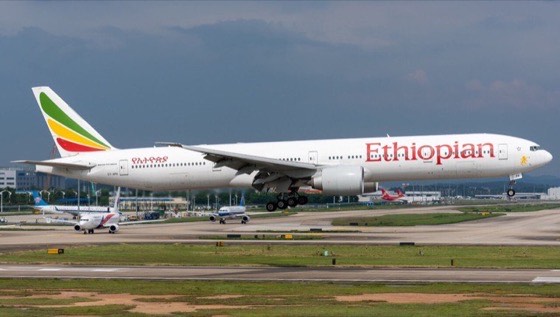
Ethiopian Airlines signed a firm order on 30 September 2026 for eight 777-8 Freighters and two current production 777 Freighters, Boeing's own announcement said, making Ethiopian the first African carrier to buy the 777-8F. Travel Extra reported the same signing, with the 777Fs due in 2027 and 2028 and the 777-8Fs between 2033 and 2035.
Safety
No significant developments since 21 September 2026.
No new accident investigation involving the type opened in this period.
Sources
- Boeing, "Ethiopian Airlines Orders Boeing 777 and 777-8 Freighters to Expand Cargo Fleet", 30 September 2026. https://boeing.mediaroom.com/2026-09-30-Ethiopian-Airlines-Orders-Boeing-777-and-777-8-Freighters-to-Expand-Cargo-Fleet
- Travel Extra, "Ethiopian Airlines signs for 8 B777-8Fs, 2 B777Fs", 30 September 2026. https://www.travelextra.ie/ethiopian-airlines-signs-for-8-b777-8fs-2-b777fs/
- Leeham News and Analysis, "Examining Why Boeing's 777X Certification Timeline Is Likely Slipping", 17 September 2026. https://leehamnews.com/2026/09/17/examining-why-boeings-777x-certification-timeline-is-likely-slipping/
- Airways Magazine, "Seven years on: Boeing 777X Certification Delay Pushes Toward 2027", 2026. https://www.airwaysmag.com/new-post/boeing-777x-certification-delay-pushes-toward-2027
- One Mile at a Time, "Boeing 777X Deliveries Delayed Again, As Certification Issues Drag On Into 2027", 2026. https://onemileatatime.com/news/boeing-777x-delay/
- Air Cargo News, "First 777-8F spotted at Boeing's factory", April 2026. https://www.aircargonews.net/airlines/2026/04/first-777-8f-spotted-at-boeings-factory/
- Air Data News, "First 777-8 Freighter spotted nearing completion in Everett", 2026. https://www.airdatanews.com/boeing-777-8-f-rolled-out-everett/
- Air Cargo News, "B777-8F delays behind Cargolux decision to purchase China Airlines B747-400Fs", July 2026. https://www.aircargonews.net/freighter-operator/2026/07/b777-8f-delays-behind-cargolux-decision-to-purchase-china-airlines-747-400fs/
- IBA, "The 777X Hit With Fresh Delays", 2026. https://www.iba.aero/resources/articles/the-777x-hit-with-fresh-delays/
- Leeham News and Analysis, "FAA Approves 35 more Boeing 777Fs, But There are Challenges", 17 September 2026. https://leehamnews.com/2026/09/17/faa-oks-35-more-boeing-777fs-but-there-are-challenges/
- Air Cargo News, "Boeing to continue producing 777Fs after FAA approves emissions exemption", September 2026. https://www.aircargonews.net/airlines/2026/09/boeing-to-continue-producing-777fs-after-faa-approves-emissions-exemption/
- FlightGlobal, "SPEEA union members ratify contract with Boeing, preventing strike", 1 October 2026. https://www.flightglobal.com/airframers/2026/10/speea-union-members-ratify-contract-with-boeing-preventing-strike/
- Manufacturing Dive, "Boeing engineers, technical workers approve contracts, averting strike", 1 October 2026. https://www.manufacturingdive.com/news/boeing-speea-engineer-union-vote-approve-proposal/831928/
- KIRO 7, "SPEEA members approve Boeing contracts with 10% raises after rejecting earlier offer", 1 October 2026. https://www.kiro7.com/news/local/speea-members-approve-boeing-contracts-with-10-raises-after-rejecting-earlier-offer/YPYS63POONHRTPHC6SGIDU223Q/
- FlightGlobal, "GE9X mid-seal problem holding up Boeing's 777-9 ETOPS approval", September 2026. https://www.flightglobal.com/airframers/2026/09/ge9x-mid-seal-problem-holding-up-boeings-777-9-etops-approval/
- Aviation Week, "GE9X Engine Mid-Seal Could Delay Boeing 777-9 ETOPS", September 2026. https://aviationweek.com/aerospace/aircraft-propulsion/ge9x-engine-mid-seal-could-delay-boeing-777-9-etops
- Air Data News, "Boeing says 777-9 testing could extend into 2027 over GE9X issue", September 2026. https://www.airdatanews.com/boeing-says-777-9-testing-could-extend-into-2027-over-ge-9-x-issue/
- Federal Register, "Airworthiness Directives; The Boeing Company Airplanes", AD 2026-19-04, docket 2026-19751, published 28 September 2026. https://www.federalregister.gov/documents/2026/09/28/2026-19751/airworthiness-directives-the-boeing-company-airplanes
- The Flight Brief, "FAA 777 ACMP Pump Fire AD Takes Effect", 28 September 2026. https://www.theflightbrief.com/articles/faa-777-acmp-hydraulic-pump-fire-ad
- FlightGlobal, "FAA proposes Boeing 777 landing gear pump replacement rule after wheel well fire", November 2025. https://www.flightglobal.com/safety/faa-proposes-777-landing-gear-pump-replacement-after-fire/165306.article