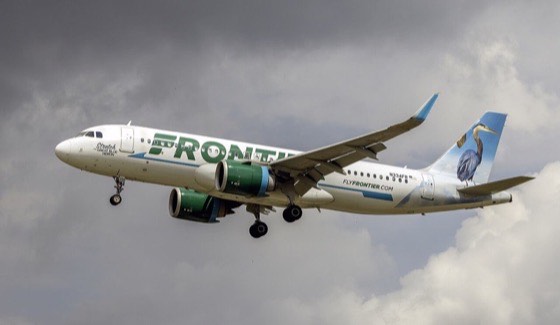
A320neo family
A319neo, A320neo, A321neo, A321XLR
Two independent sources on every claim.
At a glance
- The GTF powder metal inspection campaign is still the defining issue. Roughly 770 GTF powered jets were in storage at the end of 2025, and groundings fell about 15 percent in the first quarter of 2026 as shop capacity improved.
- A new FAA Airworthiness Directive effective 18 September 2026 requires inspections of the main landing gear support rib on a wide range of ceo and neo models after a production quality escape.
- Airbus disclosed on 24 September 2026 that a fuselage quality defect, insufficient anti corrosion primer on A321neo stringers, affects roughly 500 aircraft. Airbus and Leonardo traced the fault to subcontractor TESI and gave affected operators a two year repair window and a nine day fix. A single source Reuters report says the rework has pushed up to 20 A321neo deliveries into the fourth quarter.
- An IndiGo A321neo suffered a tail strike on a go around landing at Bengaluru on 27 September 2026. No one was hurt, and India's civil aviation regulator opened an investigation.
Type card
| Variants | A319neo, A320neo, A321neo, A321LR, A321XLR |
| Engines | Pratt and Whitney PW1100G or CFM LEAP-1A |
| Typical seating | 140 to 244 |
| Assembly | Toulouse, Hamburg, Mobile, Tianjin |
| Status | In production, ramping toward 75 per month |
| Entered service | 2016 |
Program and production
Airbus wants 75 A320 family aircraft per month, and will not get there in 2026. The company now expects output between 70 and 75 per month by the end of 2027, stabilising at 75 thereafter, though Leeham News reported in August that Airbus is pushing to move sooner.
The constraint is engines. Pratt and Whitney GTF supply has been short, because the same industrial capacity that builds new engines is also feeding the inspection and repair campaign on engines already in service. Airbus has had to choose between new build allocation and support for its customers' grounded fleets, and Pratt has prioritised the grounded fleet.
The ramp is being delivered through final assembly line expansion across four countries and a deliberate shift in mix toward the A321neo, which is where the demand and the margin are. The A321XLR has opened routes that a single aisle could not previously fly, and it continues to pull orders from operators who would otherwise have needed a widebody.
Group guidance for 2026 sits at around 870 commercial deliveries, reaffirmed on 24 September 2026 despite the stringer primer defect described below. Airbus delivered 72 aircraft in September, up 26 percent from 57 in August, for 547 delivered through the first nine months. The A321neo made up 37 of September's total. A 28 September Reuters report had forecast a dip from stringer rework, which the actual figures do not show.
Technical and maintenance
The powder metal issue in the PW1100G remains the largest single fleet disruption in commercial aviation since the 737 MAX grounding.
In plain terms
Turbine discs are made from metal powder compacted at high temperature. Pratt and Whitney found that some powder batches contained contamination, which can seed a crack in a part spinning at very high speed in the hottest part of the engine. Affected engines have to come off the wing and be inspected, whether or not anything is actually wrong with them.
Pratt disclosed the defect in 2023, and the campaign has covered 600 to 700 engines through 2026, about 38 percent of the global A320neo fleet. RTX said in April 2026 that groundings are easing as shop capacity ramps.
On the line
Shop turnaround on an affected engine still runs 250 to 300 days, so spare engine access, not inspection scheduling, is the planning constraint here. Operators have been cannibalising nearly new A321neos for engines and components to cope.
Industry observers expect genuine normalisation only in 2027 or 2028, so plan against the later date.
Pratt and Whitney delivered its first GTF Advantage powered aircraft, an A321XLR, to United Airlines on 24 September 2026, a durability upgrade to the PW1100G that does not retroactively fix an engine already in the inspection queue.
A separate quality escape surfaced on 24 September 2026, this time in the A321neo fuselage rather than the engine. A subcontractor to Airbus's Italian aerostructures supplier Leonardo applied insufficient anti corrosion primer to stringers, the long aluminium stiffeners that reinforce the fuselage skin, on a batch of aircraft. Roughly 500 aircraft are affected, about 250 already delivered and due for rework, and about 250 still in production. Airbus called it a quality issue, not a safety one, and said affected aircraft can keep flying. No EASA or FAA Airworthiness Directive had been issued as of 28 September 2026.
Reuters and Airways Magazine reported on 28 September 2026 that Airbus and Leonardo have traced the defect to TESI, a Leonardo subcontractor near Naples. Operators taking delivery of an affected aircraft have two years to complete the repair rather than the usual four year interval, and the fix takes up to nine days without removing the stringer panel from the fuselage. The longer range A321XLR, built to a different structural standard, is not affected.
On the line
If your fleet has A321neo aircraft delivered in 2026, or due for delivery this year, expect Airbus or your MRO to flag affected manufacturer serial numbers for a stringer primer rework. Build it into a scheduled heavy check within the two year window rather than treating it as an unscheduled visit, and budget roughly nine days of hangar time when it comes up.
A separate structural item lands on both engine families. The FAA adopted an Airworthiness Directive effective 18 September 2026 covering a wide range of A318, A319, A320 and A321 models, ceo and neo alike, prompted by a production quality escape: tool mark damage in the main landing gear support rib 5 lugs from an improper bush removal technique at the supplier. Left unaddressed, the damage could lead to fatigue cracking and collapse of the main landing gear. The directive requires repetitive visual inspections, with a one time terminating inspection available.
On the line
This directive reaches ceo and neo production standards alike, so check effectivity by manufacturer serial number. The one time terminating inspection is worth scheduling now, since it closes out the repetitive requirement for good.
Orders and operators
Order intake remains very strong and the backlog is measured in years of production. The A321neo and A321XLR dominate the mix.
The engine situation is shaping fleet behaviour more than order behaviour. Operators with heavy GTF exposure have kept A320ceo aircraft flying past planned retirement, taken short term leases at elevated rates, and in some cases parked new aircraft for want of serviceable engines. At least one carrier failed during 2026 with GTF groundings cited as a contributing factor.
Safety
An IndiGo A321neo, registration VT-IBH, suffered a tail strike on its second landing attempt at Bengaluru on 27 September 2026, after going around from a gusty first approach. Everyone aboard was uninjured, and the aircraft was grounded for inspection. India's Directorate General of Civil Aviation opened an investigation into the approach, the flight data and the weather.
The powder metal campaign and the stringer defect remain airworthiness matters rather than accident investigations. No other new investigation involving the type opened in this period.
Sources
- Leeham News and Analysis, "Airbus pushing to increase monthly A320neo production rate sooner than later", 19 August 2026. https://leehamnews.com/2026/08/19/airbus-pushing-to-increase-monthly-a320neo-production-rate-sooner-than-later/
- Leeham News and Analysis, "Airbus' full-year guidance back on track after record aircraft delivery pace in Q2", 29 July 2026. https://leehamnews.com/2026/07/29/airbus-full-year-guidance-back-on-track-after-record-aircraft-delivery-pace-in-q2/
- Air Data News, "Airbus targets around 870 deliveries in 2026 as engine issues slow A320neo ramp-up", 2026. https://www.airdatanews.com/airbus-targets-around-870-deliveries-in-2026-as-engine-issues-slow-a320neo-ramp-up/
- FlightGlobal, "RTX says GTF groundings are coming down thanks to maintenance ramp", April 2026. https://www.flightglobal.com/engines/2026/04/rtx-says-gtf-groundings-are-coming-down-thanks-to-maintenance-ramp/
- The Air Current, "Caught between Airbus and airlines, Pratt prioritizes the grounded fleet", 2026. https://theaircurrent.com/engine-production/pratt-airbus-airlines-gtf-prioritizes-grounded-fleet/
- RTX Investor Relations, "RTX provides update on Pratt & Whitney GTF fleet", 2026. https://investors.rtx.com/static-files/359baa3b-0f38-4949-8b62-d6cf02ebed0c
- AviTrader Aviation News, "Pratt & Whitney PW1000G in the Global Engine Crisis", 20 November 2025. https://avitrader.com/2025/11/20/unimaginable-and-unpredictable-nearly-new-airbus-a321neos-being-cannibalised-for-their-engines-and-components/
- Airbus, "Ramping up A320 Family production", October 2025. https://www.airbus.com/en/newsroom/stories/2025-10-ramping-up-a320-family-production
- Federal Register, "Airworthiness Directives; Airbus SAS Airplanes", effective 18 September 2026. https://www.federalregister.gov/documents/2026/09/03/2026-18052/airworthiness-directives-airbus-sas-airplanes
- Airways Magazine, "FAA Issues Three ADs for Airbus Structures, ATR Cargo Valve Tests", September 2026. https://www.airwaysmag.com/new-post/faa-airworthiness-directives-airbus-atr-september-2026
- RTX, "RTX's Pratt & Whitney marks delivery of first GTF Advantage-powered aircraft to United Airlines", 24 September 2026. https://www.rtx.com/news/news-center/2026/09/24/rtxs-pratt-whitney-marks-delivery-of-first-gtf-advantage-powered-aircraft-to-u
- AeroTime, "United receives P&W's first GTF Advantage-powered aircraft", 24 September 2026. https://www.aerotime.aero/articles/united-airlines-pratt-whitneys-first-gtf-advantage-powered-aircraft
- The Air Current, "New A321neo quality defect adds pressure to Airbus delivery schedule", 24 September 2026. https://theaircurrent.com/aircraft-production/new-a321neo-quality-defect-pressure-airbus-delivery-schedule/
- Reuters, via U.S. News and World Report, "Airbus Identifies A321neo Quality Issue, Says No Safety Risk", 24 September 2026. https://money.usnews.com/investing/news/articles/2026-09-24/airbus-alerts-customers-to-a321neo-defect-potentially-affecting-over-500-aircraft-air-current-reports
- Air Data News, "Quality defect affects around 500 Airbus A321neo jets", 24 September 2026. https://www.airdatanews.com/quality-defect-affects-around-500-airbus-a321neo-jets/
- Reuters, via Investing.com, "Airbus probes A321neo flaw as repair plan eases disruption", 28 September 2026. https://www.investing.com/news/stock-market-news/airbus-probes-a321neo-flaw-as-repair-plan-eases-disruption-4919499
- Airways Magazine, "Airbus Traces A321neo Stringer Coating Flaw to a Supplier", 28 September 2026. https://www.airwaysmag.com/new-post/airbus-a321neo-stringer-coating-flaw-supplier
- AeroTime, "IndiGo A321 suffers tail strike during second landing attempt in Bengaluru", 27 September 2026. https://www.aerotime.aero/articles/indigo-a321-suffers-tail-strike-during-second-landing-attempt-in-bengaluru
- LatestLY, "IndiGo Flight 6E 6542 Suffers Tail Strike During Landing at Bengaluru Airport; DGCA to Probe", 27 September 2026. https://www.latestly.com/india/news/indigo-flight-6e-6542-suffers-tail-strike-during-landing-at-bengaluru-airport-dgca-to-probe-7623024.html
- Reuters, via Investing.com, "Airbus faces dip in September deliveries after quality snag, sources say", 28 September 2026. https://www.investing.com/news/stock-market-news/airbus-faces-dip-in-september-deliveries-after-quality-snag-sources-say-4920971
- Air Data News, "Airbus may push up to 20 A321neo deliveries into fourth quarter after quality issue", 28 September 2026. https://www.airdatanews.com/airbus-may-push-up-to-20-a321neo-deliveries-into-fourth-quarter-after-quality-issue/
- Airbus, "Orders and deliveries", September 2026 monthly data, 8 October 2026. https://www.airbus.com/en/products-services/commercial-aircraft/market/orders-and-deliveries
- Air Data News, "Airbus delivers 72 jets in September as order backlog falls by 58 aircraft", 8 October 2026. https://www.airdatanews.com/airbus-delivers-72-jets-in-september-as-order-backlog-falls-by-58-aircraft/